Blog Issue 7: Not Who They Said We Were, But Who We Are: Building a Story Big Enough for All of Us
By Dakota Rottino-Garilli (she/her), Post-Secondary Support Program Manager
"Those that run these systems mean to tell us that they get to categorize us, name us, decide whether to endow us with our natural rights through their checkboxes and pieces of paper, but, after all these years, I will not allow the tool of language to be taken from me. We name ourselves through our resistance."
If there’s one thing I’m meant to be good at, it’s words. I started writing when I was six years old on my grandmother’s couch, soap operas and the Turner Classic Movie channel playing in the background. My grandmother was the daughter of Sicilian immigrants who came to the States in the early 1900s. My great-grandfather was a furnaceman at a bed factory who, when he arrived, according to census records, couldn’t read or write; my great-grandmother made money for the household by selling embroidery she worked on at home. By the time I was born, we didn’t talk about ancestors much; we were American, spoke only English, did American things and had American ideas. But I see them now in black-and-white photos and factoids I come across in genealogical research. I am always trying to put together their stories, to understand in that way more of who I am
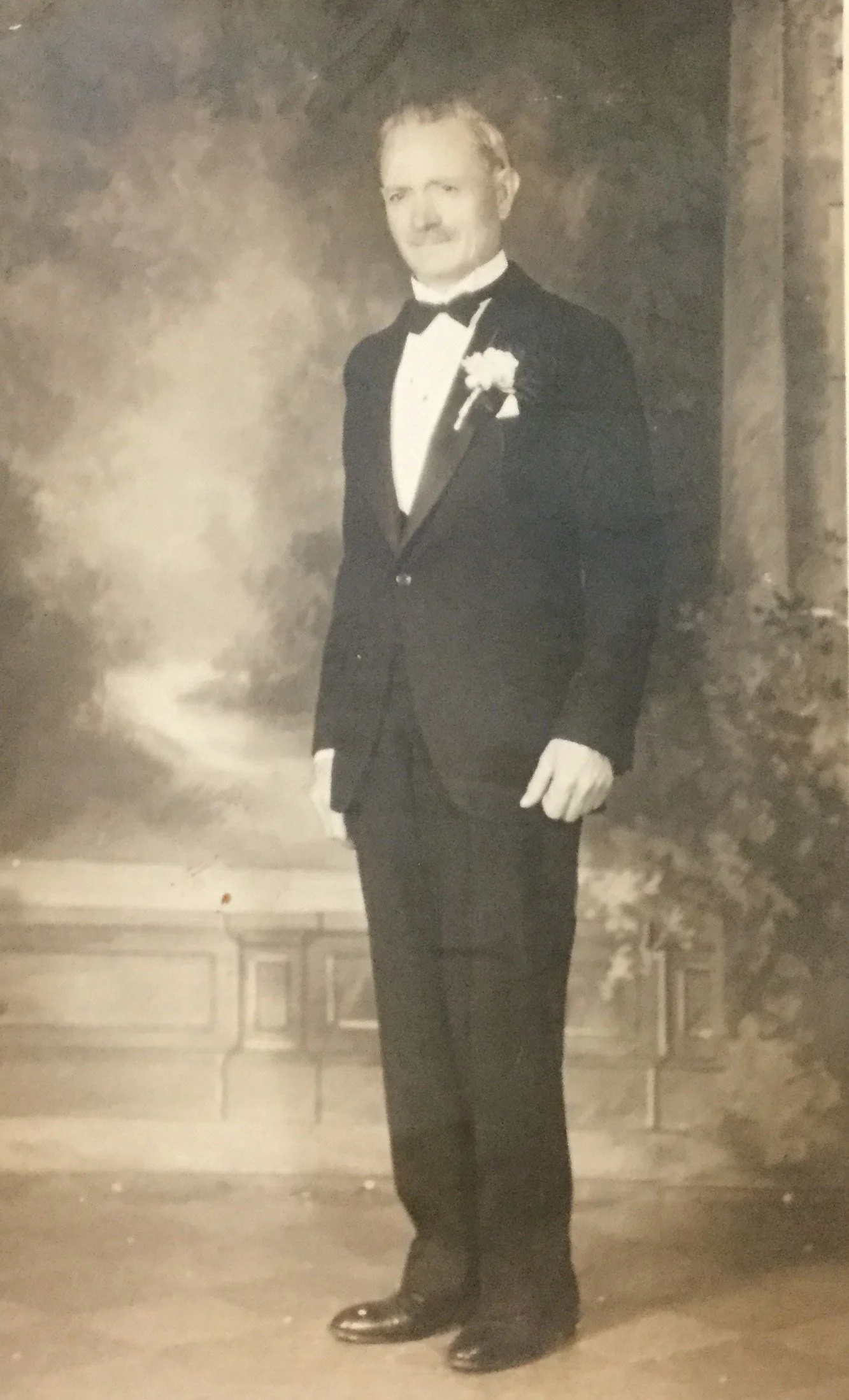
Dakota's great-grandfather at her grandmother's wedding.
In 1996, when I started writing, I felt separate from the world around me. I knew I was different but I didn’t have the language for how. Everyone said I was a boy, but I liked boys, which was clearly against the rules. I knew that from the stories I heard in church and my Catholic elementary school, where I spent time drawing pictures, hopelessly fumbling basketballs, feeling awed by and magically drawn to the girls in my class. I understood what they meant as we got older and they whispered about crushes on the popular boys. But most of those kids didn’t have divorced parents, their grandmothers weren’t hoarders who were losing their grip on memory, and they didn’t seem to have many deep, dark secrets. Meanwhile, there I was writing stories about characters who felt too different, too distant, wondering if they’d ever really be welcomed into the world around them.
Back then, we didn’t use the word “queer” freely—I don’t know if I even heard the word “gay” before high school. Maybe as a slur… and I grew up 15 minutes away from New York City! There certainly weren’t any trans people around in real, everyday life, and the ones on TV or in movies were psychopaths or jokes. If I took the world’s word for it, there was something irredeemably wrong about me… something I should never share with others, that couldn’t be understood or empathized with, that should only be apologized for.
I didn’t know, for example, that, long ago, there were documented histories of people living outside of their culture’s gender lines in every society on every populated continent around the globe. Indigenous third gender people in the Polynesian islands were considered the keepers of cultural wisdom; indigenous third gender people in the Americas were healers and teachers; indigenous third gender people across Africa were considered to be closer to the spiritual realm. In every language, these people had names (yan daudu, muxe, hijra, māhū, fa’afafine, chibadi, galli, bissu, winkté, nádleehi) and, often, honored roles in their communities. It was the mission of European colonization and religious extremism to erase these rich, colorful realities or recast them as sick, sinful, and dangerous. It shouldn’t be surprising that one of the most complete erasures of the existence of queer people post-colonization came under Nazi rule with the looting and book-burning of the Institute of Sexual Research in Berlin in 1933. People who are told who they can and can’t be are much easier to control.
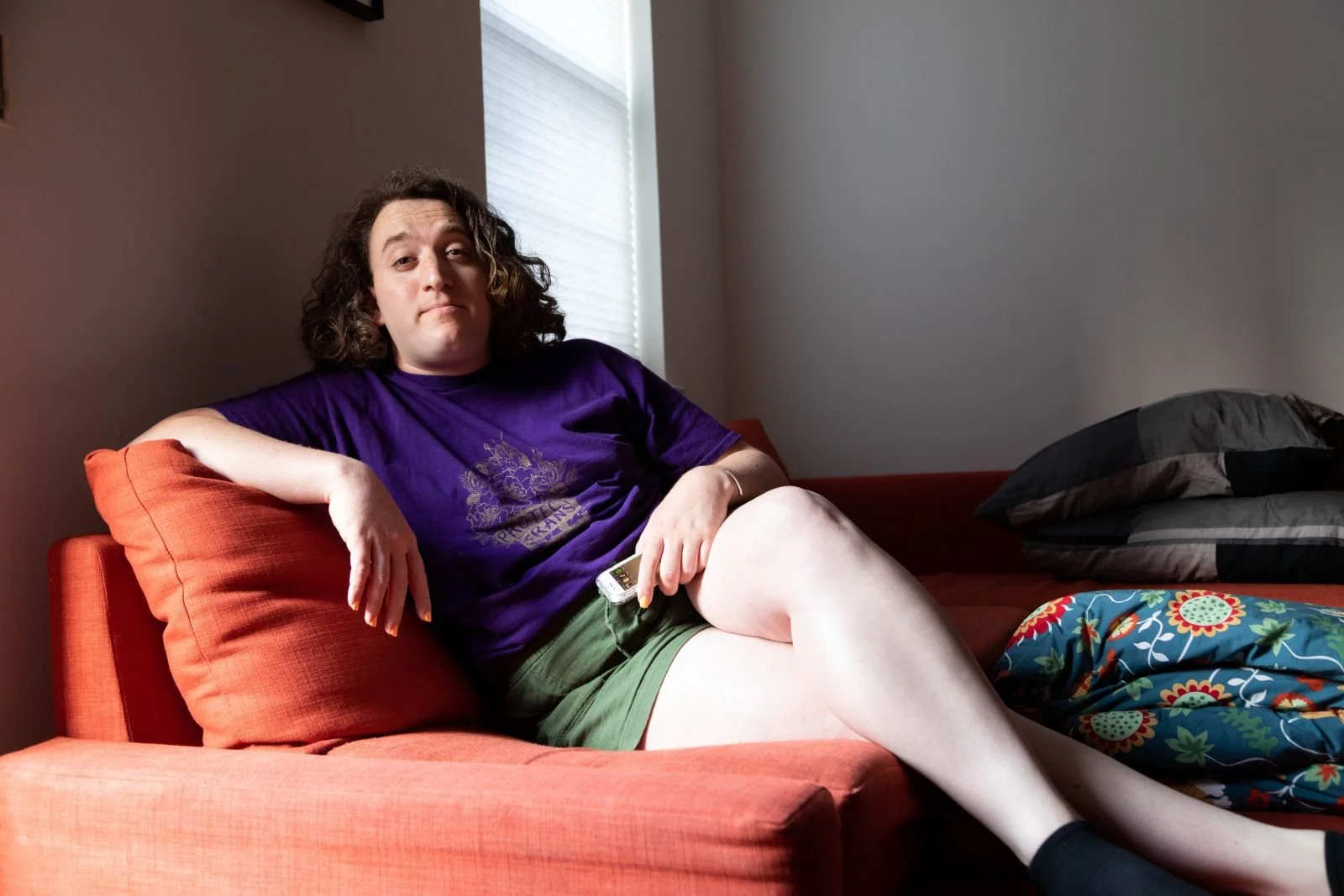
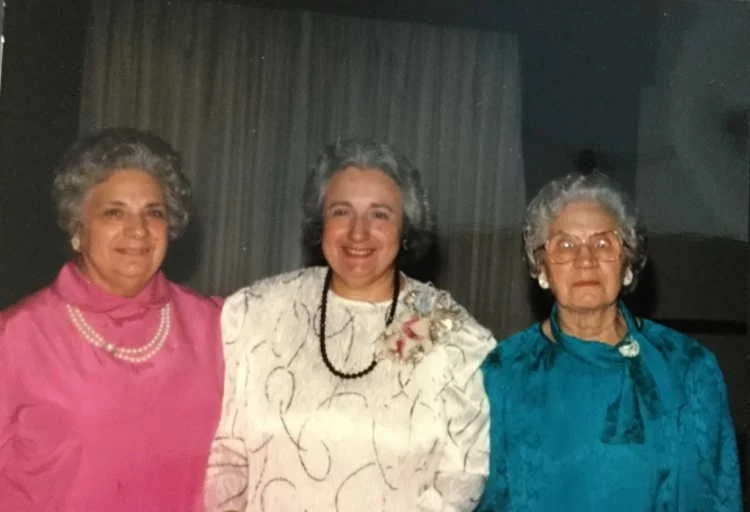
Dakota relaxing on a birthday trip to Baltimore.
One of the greatest crimes we can commit against another person is to steal their ability to know themselves. When parents in the 80s and 90s told their children there weren’t any gay people in their suburban communities, that lie was built on the back of thousands of lives lost in the AIDS crisis. When Afghan and Palestinian youth today are accused of being terrorists, that vitriol is authorized by a media committed to erasing the U.S.’s history of attacks on central Asia and the Middle East in the name of securing mineral resources, political allies, and ties to land. When individuals who speak out against state-sanctioned violence are called criminals, rioters, crisis actors, and worse, that twisting of the truth is employed to supplant the ability of the power-hungry to continually concentrate wealth and rule in the hands of a chosen few. But as George Orwell writes, “In a time of universal deceit, telling the truth is a revolutionary act.”
The truth is that I am a trans woman, a non-binary person, the great-granddaughter of immigrants whose identities were constantly being collapsed and reworked to suit the narrative of the times. I am a writer and educator. I am a white woman working to decenter the corrosive, obliterating work that whiteness tries to do in my life and the lives of others every day. I am a student of abolition, of Fannie Lou Hamer’s words that “Nobody’s free until everybody’s free,” James Baldwin’s words that “The world is before you, and you need not take it or leave it as it was when you came in,” Angela Davis’ words that “You have to act as if it were possible to radically transform the world. And you have to do it all the time.” Over these truths, I have lost biological family and gained chosen family; I have come to understand myself with new words and in new ways.
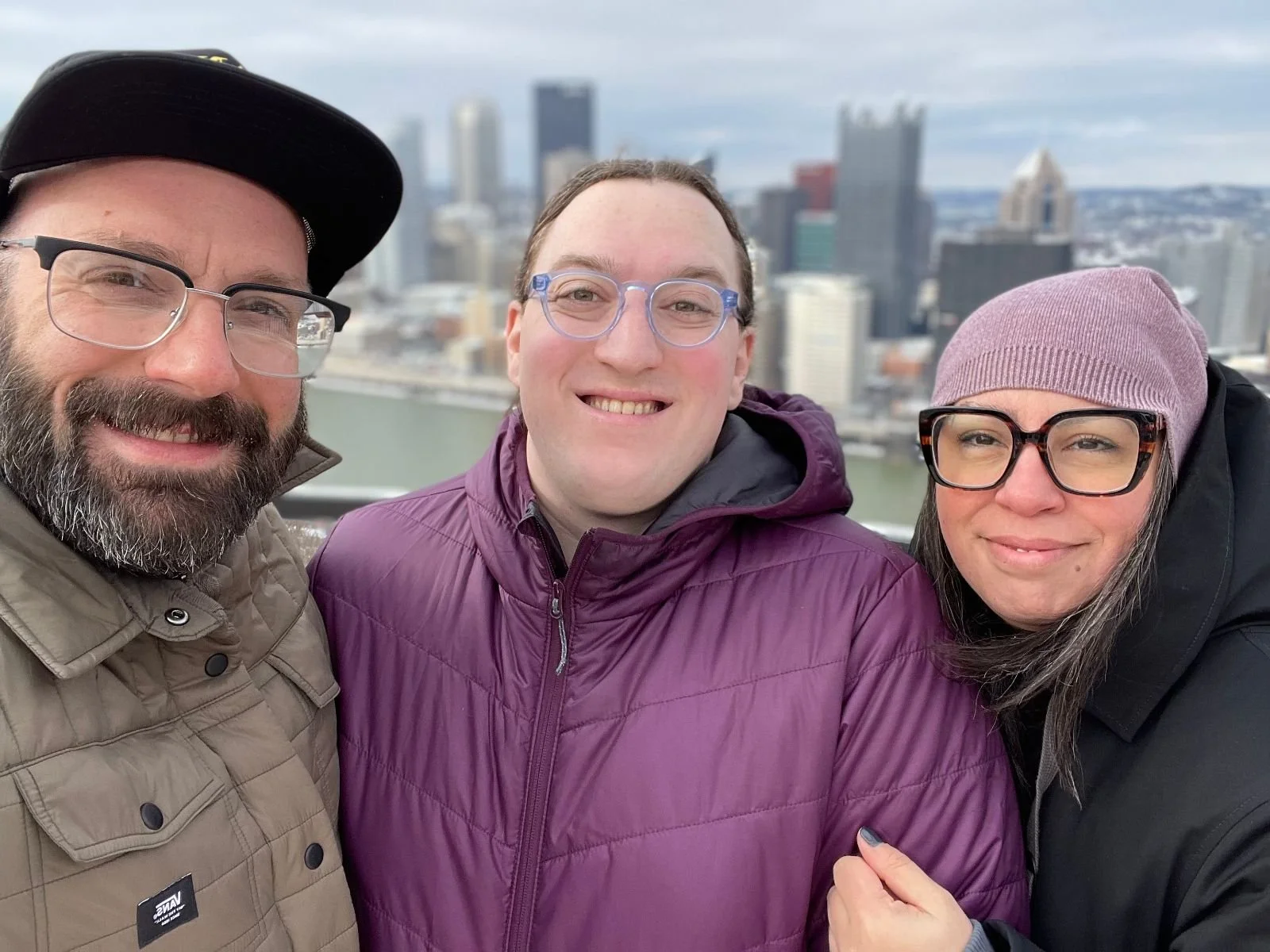
But the story is not over and the work is not done. There is still more of the bigger picture to be seen. We must resist easy narratives, written by the State, of queerphobic specters abroad or the importing of homophobia via immigration when there is home-grown transphobic policy being written right here at record rates. And we need to keep drawing the connection between these attacks and attacks on other vulnerable communities.
At this time, I cannot get a passport with a proper gender marker on it, by direction of the current Department of State—in the same era when the current Department of Homeland Security is attempting to erase the rights and hard-won documentation of refugees, asylees, and immigrants across the country. Trans folks in Kansas were recently told their drivers’ licenses had become invalid overnight, and proposed federal legislation (the “SAVE America Act”) would make it more difficult for trans people, Black folks, naturalized citizens, and others to vote. Those that run these systems mean to tell us that they get to categorize us, name us, decide whether to endow us with our natural rights through their checkboxes and pieces of paper, but, after all these years, I will not allow the tool of language to be taken from me. We name ourselves through our resistance.
And while trans and forcibly displaced folks are hypervisible in today’s political narratives, Black folks are being erased. Take as just one example the differences in public awareness and response to the murders of Keith Porter Jr., Renée Good, and Alex Pretti by ICE. We are all responsible now for parsing through the information we are being given, seeking and sharing the truth, uplifting the voices of those most impacted, and standing together to ensure that we can all be safe, alive, with our loved ones, free.
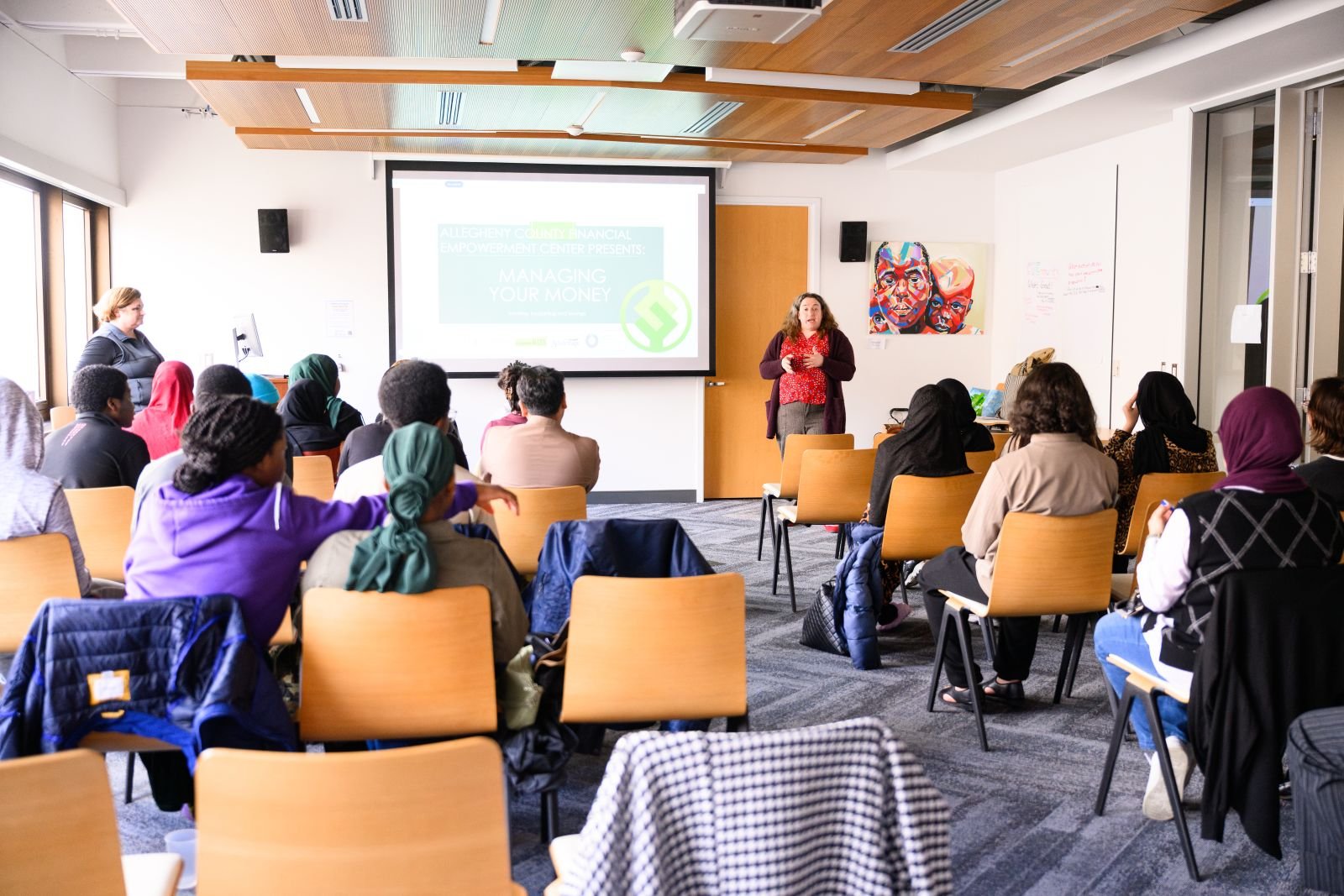
Dakota introduces the agenda at the inaugural ARYSE Financial Empowerment event titled: Understanding Money, Entering Adulthood.
I don’t know what my great-grandparents were called by the people they passed on the streets of Hoboken, New Jersey, in municipal offices, or in factories. I don’t know their favorite recipes or songs. I don’t know if there were any trans women in their neighborhood or the villages they grew up in. I don’t know the extent to which the students I work with today are absorbing all these old narratives, passed down and repackaged by candidates and lobbyists who lie to suit the whims of those in power. I don’t know if my words or my body can be a suitable, sufficient container for the anger, the grief, the confusion, or the joy of being alive today and being in resistance. But I think about an idea I read some years ago on the Internet, from a source I can no longer recall, called the Parable of the Choir.
As Elizabeth Bromley writes, “The Parable of the Choir goes like this: A choir can sing a beautiful note impossibly long because singers can individually drop out to breathe as necessary and the note goes on.” No one of us needs to be sufficient to tell the whole story as long as we do it together. And, I’d add, no choir is complete without everyone’s voice, all those distinct pitches and tones, those unique words and resonances, those richly textured breaths, each of them weaving a story together for us all to remember and carry into tomorrow.
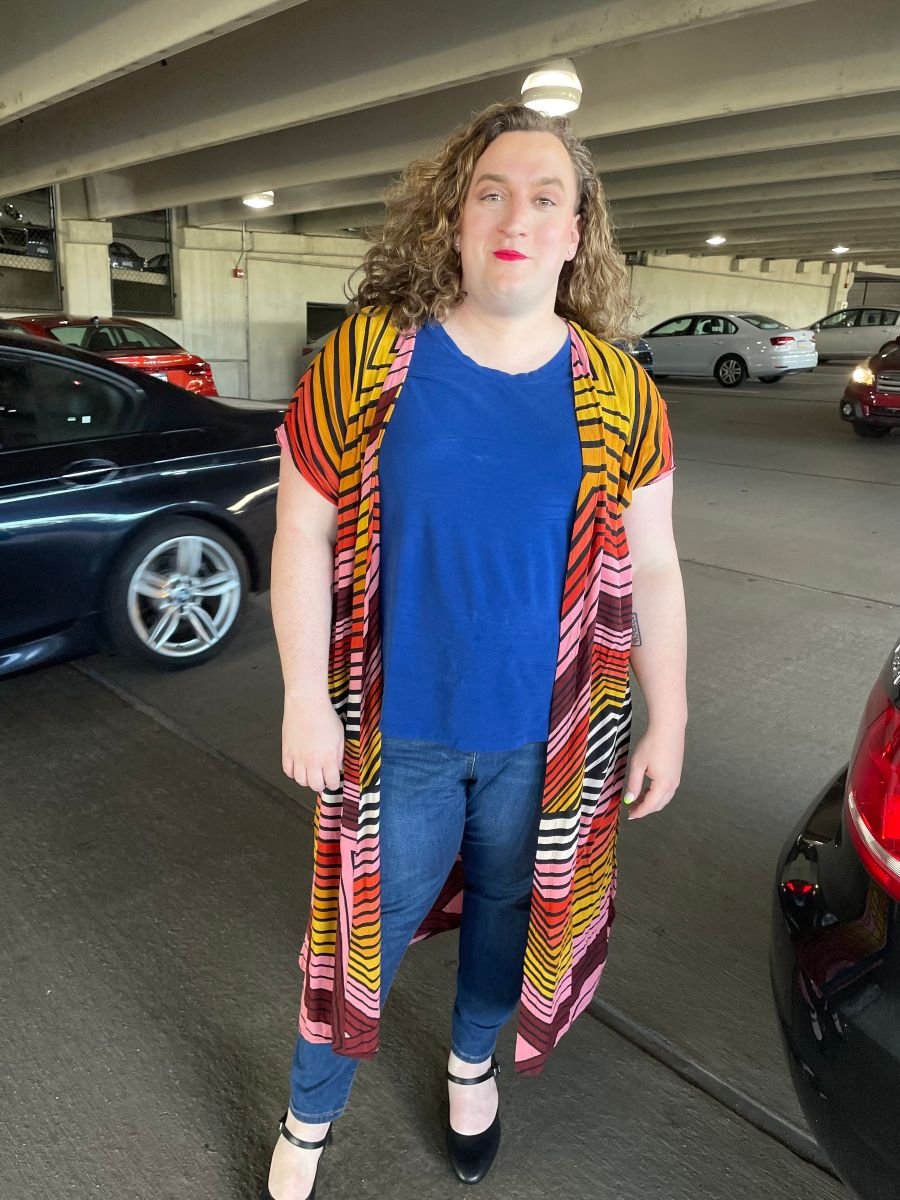
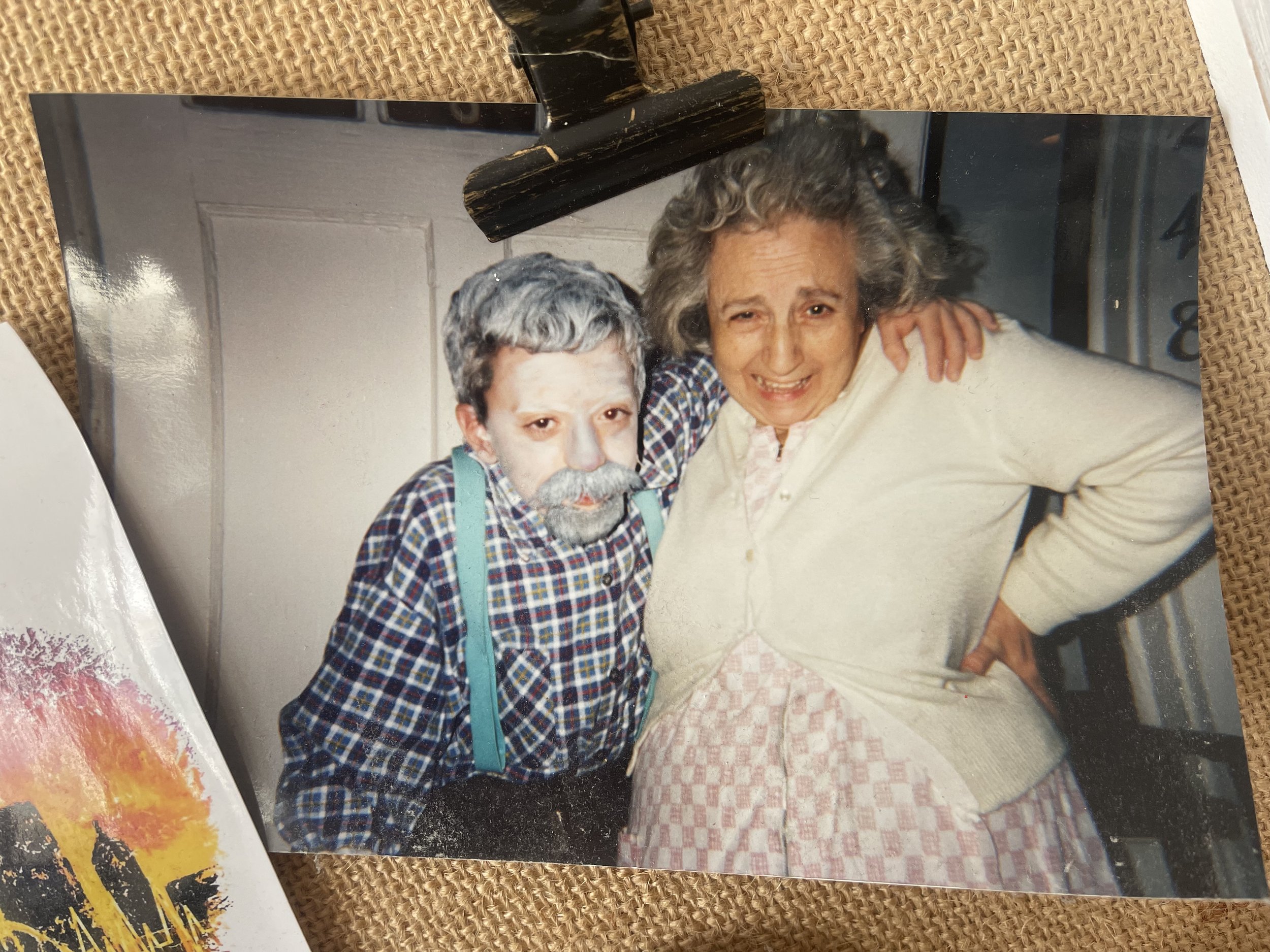
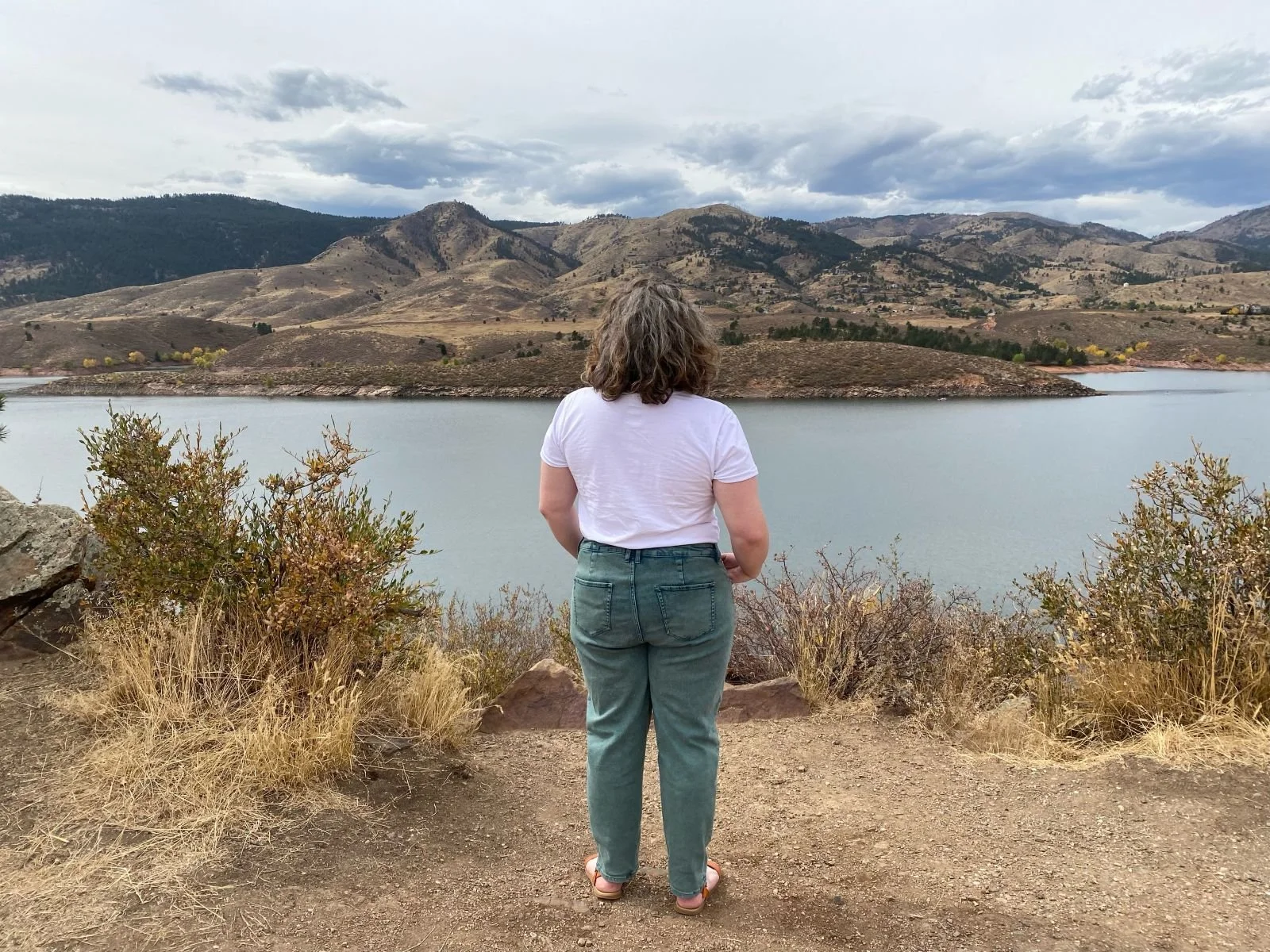
Dakota in her birthday outfit in 2022.
Other writing to check out now:
“The New Global Struggle Over Gender, Rights, and Family Values,” Saskia Brechenmacher, Carnegie Endowment for International Peace
“The Weaponisation of Queer Rights: a Migration Perspective,” Julia Tinsley-Kent and Anastasia Gavalas, European Alternatives
“The Summer’s Hottest Trend is Resisting State Oppression,” Dean Spade, them
“LGBTQ People Must Stand with Immigrants Now,” Harry Barbee, Washington Blade
“After Protesting ICE in L.A., Jen Richards Calls Out LAPD for Their ‘Rabid Aggression’,” James Factora, them
Folks I follow for quick updates and short-form content: Alok Vaid-Menon (@alokvmenon), Blair Imani Ali (@blairimani), Matt Bernstein (@Instagrammattxiv), Joanne Lee Molinaro (@Instagramthekoreanvegan), Dean Spade (@spade.dean), Chase Strangio (@chasestrangio), Kat Blaque (@kat_blaque), Imani Barbarin (@crutches_and_spice), Sonia Guiñansaca (@thesoniag), Takweer (@takweer_)
Folks I seek out for longer writing and analysis: Sara Ahmed, Hil Malatino, Audre Lorde, James Baldwin, Judith Butler, Jasbir Puar, Tourmaline, Harsha Walia, Andrea Ritchie, José Esteban Muñoz, bell hooks, Angela Davis, Reina Gossett.